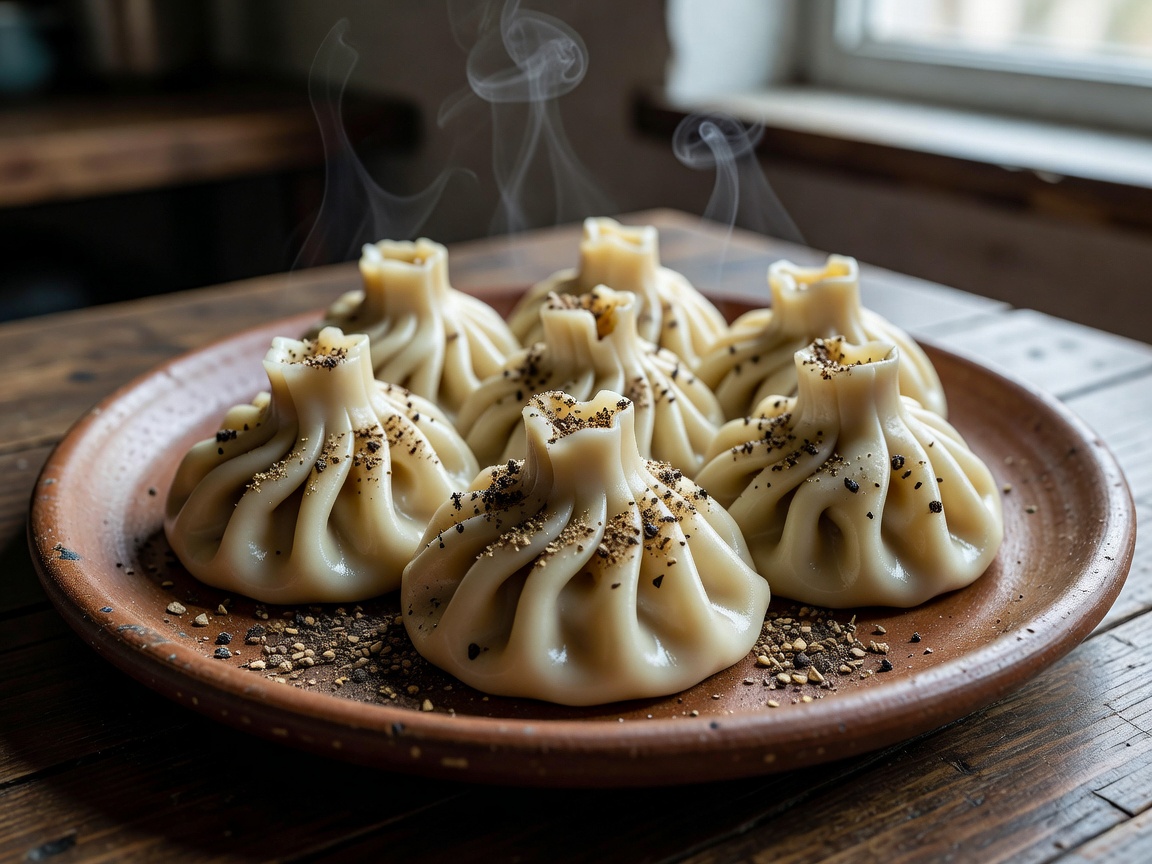
Highland Shepherds and the 19 Pleats
Originating in the rugged mountainous provinces of Khevsureti, Pshavi, and Tusheti in eastern Georgia, Khinkali was born as hearty, high-calorie sustenance for shepherds navigating harsh alpine winters. The thick wheat dough offered insulation, while minced lamb or beef preserved inside kept workers warm during long treks.
Traditional khinkali folding is regarded in Georgia as a culinary art form. Master cooks strive for at least 19 distinct folds (naocha) leading up to a dense, twisted top handle known as the kudi ("hat") or kuchi ("belly button").
"To cut a Khinkali with a knife and fork is considered a culinary sacrilege in Tbilisi. The dumpling was designed by mountain engineers to be held by the dense dough knob, bitten into, and savored without utensils."
Broth Creation without Aspic
Unlike the Chinese method of solidifying pork skin gelatin, Georgian cooks create khinkali soup through cold hydration and mechanical kneading:
- Water Incorporation: Cold water or light meat stock is gradually kneaded directly into raw minced meat until the protein matrix becomes loose and heavily saturated.
- Boiling Confinement: As the sealed khinkali boils vigorously in salted water, the meat tightens, releasing all trapped water and fat into a rich, aromatic interior pool spiced with wild caraway (kvali) and black pepper.
The Plate Counting Custom
Because the thick dough top knob remains undercooked during boiling, it is intentionally left uneaten. Guests pile their discarded handles on the edge of their plates. At the end of a traditional Georgian Supra (feast), the knobs are counted to determine the table's champion khinkali consumer.