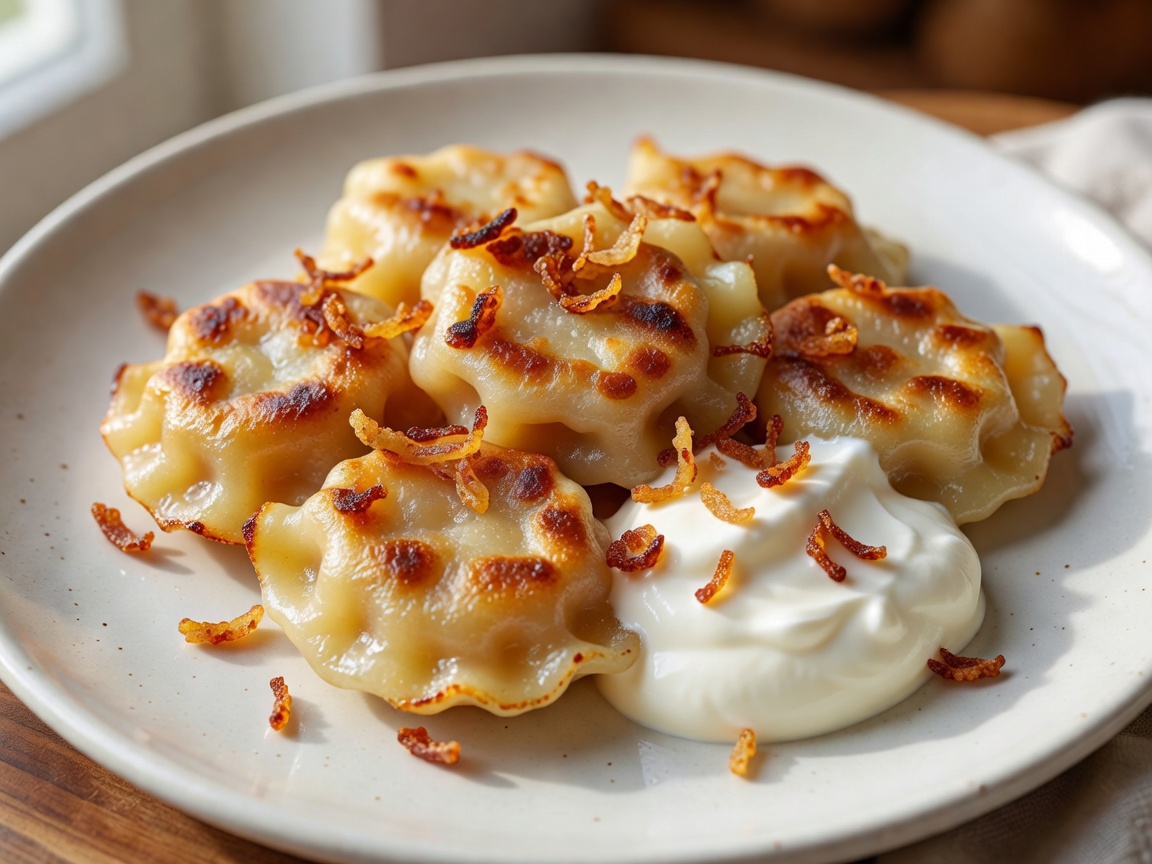
Monastic Heritage and the Red Ruthenian Origin
Documented in Poland since the 13th century (legend attributes their arrival to Saint Hyacinth bringing dumplings from Kyiv to feed famine victims), Pierogi Ruskie takes its name not from modern Russia, but from the historical region of Red Ruthenia (Ruś Czerwona), situated around today's eastern Poland and western Ukraine.
The hallmark of authentic Polish pierogi dough is its velvety elasticity, traditionally achieved by kneading wheat flour with hot water, melted butter, and occasionally a spoonful of sour cream (śmietana). This fat-enriched dough stays soft even when re-fried on day two.
"A real Pierogarnia chef does not use a fork to crimp the edge; they use the natural ridge of their thumb and index finger to form the scalloped 'falbanka' hem, ensuring air is completely expelled before boiling."
The Twaróg & Potato Chemistry
The filling of classic Pierogi Ruskie is a study in texture balance:
- Twaróg Cheese: Polish curd cheese provides a distinct, lactic acidity and crumbly texture that cannot be matched by Italian ricotta or American cottage cheese.
- Starchy Russet Potatoes: Steamed and mashed hot with sweet butter and copious amounts of slowly caramelized sweet yellow onions.
- Generous Black Pepper: Coarsely ground pepper cuts through the dairy rich profile.
The Dual Cooking Technique
While fresh pierogi are delicious boiled and tossed in warm melted butter (okrasa), true connoisseurs prefer the day-after preparation: plunging chilled boiled pierogi into a sizzling cast-iron skillet with pork lard or clarified butter until the crescent base develops a crisp, golden-amber crust.