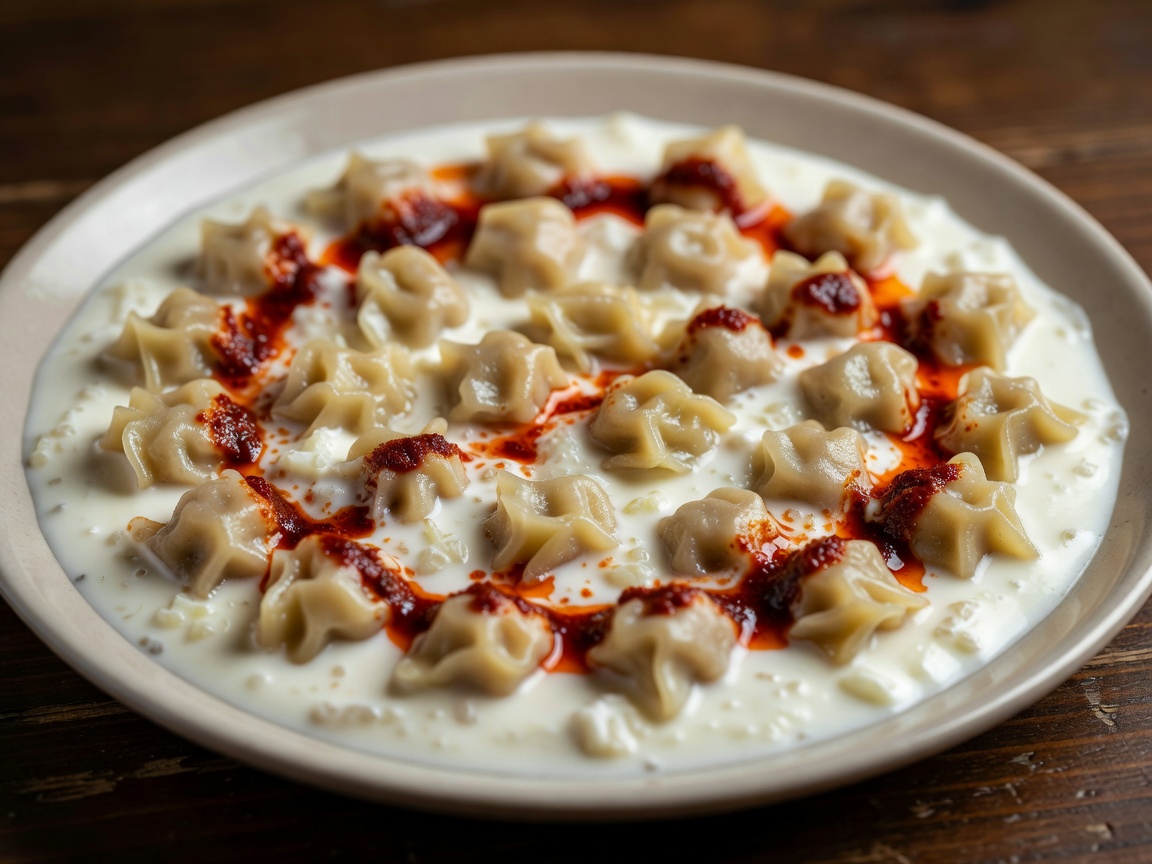
From Mongolian Horseback to Ottoman Palaces
The journey of Manti represents the vast migration of nomadic Turkic and Mongol peoples across the Eurasian steppe during the 13th and 14th centuries. Dried manti could be carried in saddlebags and reconstituted over campfires. As the dish reached Anatolia, it evolved into an aristocratic delicacy prepared for the Ottoman sultans in Istanbul's Topkapi Palace.
In the city of Kayseri, Anatolia's manti capital, cultural tradition dictated that a prospective bride's culinary skill was measured by the size of her dumplings: an accomplished cook had to fit at least 40 individual manti into a single wooden soup spoon.
"Manti is not merely a dumpling; it is a thermal contrast architecture. Piping hot boiled dough packets meet icy garlic-whipped yogurt, followed immediately by sizzling foaming butter infused with dried mint and sour sumac."
Four-Corner Cross Pinching
Unlike crescent dumplings, classic Turkish manti are constructed from tiny 2x2 cm dough squares:
- The Core: A pinhead-sized ball of raw minced lamb, grated onion, and black pepper is dropped in the center.
- The Cross Pinch: The four diagonal corners are brought together at the center point and pressed firmly, creating a micro envelope resembling a sealed letter.
The Triple Sauce Layering Technique
Serving manti is a precise choreographic plating exercise:
- The Warm Bed: The boiled micro-dumplings are arranged steaming hot on a wide shallow bowl.
- The Cool Silk: Thick strained Turkish yogurt (süzme yoğurt) whipped with crushed garlic and sea salt is poured over the center.
- The Aromatic Flare: Butter melted to the nutty stage with Turkish sweet red pepper paste (biber salçası), dried spearmint, and sumac is drizzled over the yogurt, sizzling on contact.