Trans-Himalayan Trade and Newar Merchants
The ubiquity of the Momo across Tibet, Nepal, Bhutan, Ladakh, and Sikkim is deeply tied to historical Newar merchants of the Kathmandu Valley who traveled the dangerous mountain passes to trade in Lhasa. Bringing the dumpling concept from Tibet, Newar cooks adapted the recipe by incorporating fragrant sub-continental spices: cumin, coriander, turmeric, and fresh ginger.
In high-altitude Tibet where crops are scarce, momos traditionally used yak meat and highland barley flour. In Nepal, water buffalo (buff), goat, chicken, and spiced cabbage became dominant filling options.
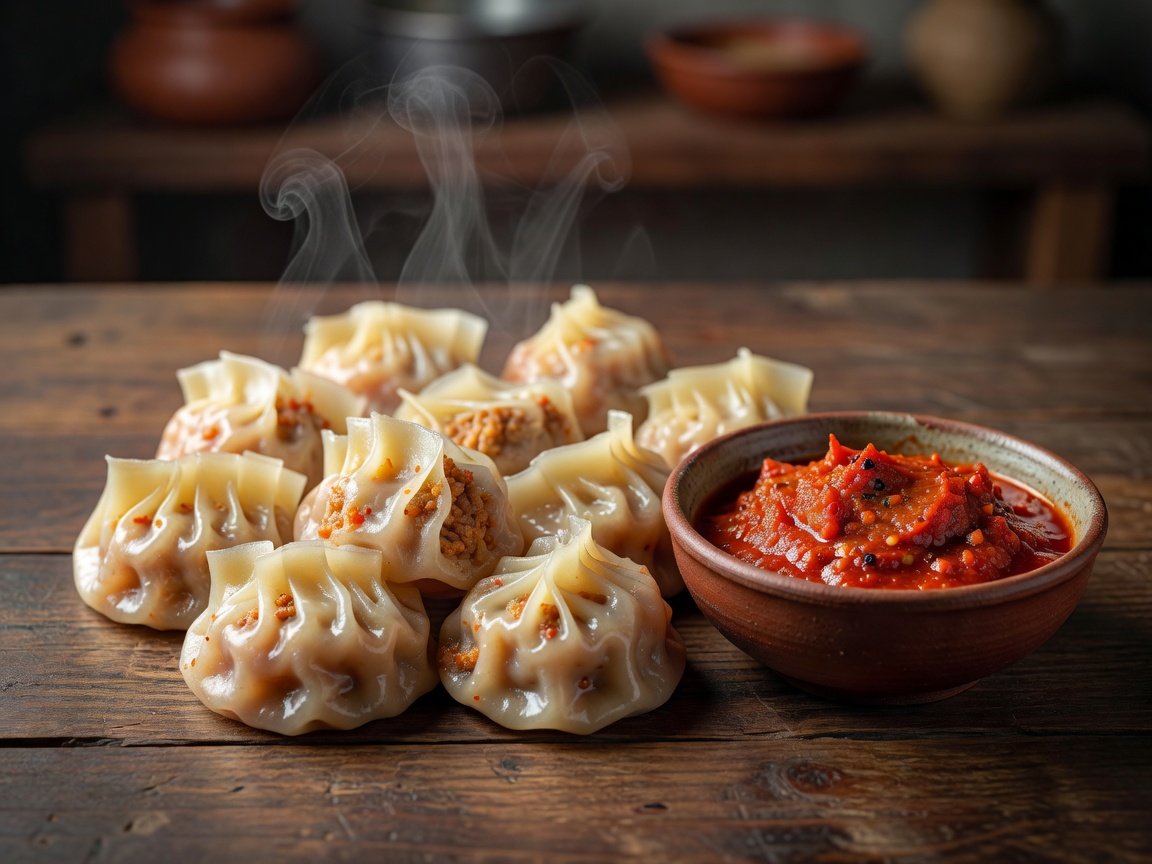
"In Tibetan homes, round pouch momos (Pothe Momo) are made for festive gatherings, while crescent-pleated folds (Kothey Momo) are reserved for quick pan-frying where a crunchy bottom is desired."
The Alchemy of Spicy Tomato-Sesame Achar
A momo is fundamentally incomplete without its accompanying Golbheda ko Achar (tomato chutney):
- Charred Plum Tomatoes: Roasted directly over open flames with fresh garlic and fiery red bird's eye chilies (akabare khursani).
- Toasted White Sesame Paste: Ground with roasted cumin seeds and Sichuan pepper (timur) to impart an earthy, citrus-numbing tingle on the palate.
Atmospheric Pressure & High-Altitude Steaming
At elevations exceeding 3,000 meters above sea level, water boils at roughly 89°C instead of 100°C due to reduced atmospheric pressure. Himalayan cooks overcame this physical limitation using tiered aluminum or heavy copper multi-level steamers called Moktu, which capture dense pressurized steam to cook the dough evenly in under 12 minutes.